
Call us now :08045476918
 Send Inquiry
 Send Inquiry
Industrial Water Softener
MOQ : 1 Unit
Industrial Water Softener Specification
- Usage
- Reduces Water Hardness for Process / Boiler / Cooling Tower / Laundry / General Use
- Accessories
- Brine Tank, Salt Measuring Device, Distribution System, Sampling Valve
- Flow Rate
- 1 m/hr to 50 m/hr
- Technology
- Cation Exchange Resin based Softening
- Type
- Industrial Water Softener
- Material
- FRP (Fiber Reinforced Plastic) / Mild Steel (MS)
- Purifying Function
- Ion Exchange Process
- Power
- No electrical power required for operation (Manual/Automatic type depend on model)
- Valve Type
- Multiport Valve / Automatic Valve
- Installation Type
- Floor Standing
- Temperature
- 5C to 50C
- Water Source
- Borewell Water / Municipal Water / Ground Water
- Dimension (L*W*H)
- Customizable as per capacity (Typical L*W*H: 450x450x1600 mm to 1000x1000x2200 mm)
- Voltage
- 230V AC / 50Hz (for automatic models only)
- Weight (kg)
- Depends on model (40 kg to 250 kg approx.)
- Mounting Type
- Vertical
- Capacity
- 1,000 LPH to 50,000 LPH
- Drain Line Flow Control
- Included
- Brine Draw Facility
- Yes
- Resin Type
- Cation exchange (strong acid) resin
- Resin Volume
- 25 to 500 liters (based on model)
- Body Coating
- Epoxy powder coating (MS models)
- Inlet Hardness Tolerance
- Up to 1000 ppm as CaCO3
- Outlet Hardness
- <5 ppm as CaCO3
- Connection Size
- 1 to 4 BSP/NPT
- Pressure Requirement
- 2 to 4 kg/cm
- Regeneration Method
- Automatic / Manual Salt Regeneration
- Control System
- Electromechanical / PLC based (for automatic models)
Industrial Water Softener Trade Information
- Minimum Order Quantity
- 1 Unit
- Main Export Market(s)
- Australia, North America, Eastern Europe, Western Europe, Middle East, Africa, Central America, South America, Asia
- Main Domestic Market
- North India
About Industrial Water Softener
We are successfully catering to the requirements of clients by offering a premium range of Industrial Water Softener. Manufactured using quality materials including MS, MSRL and FRP at our state of the art machining facility, these softeners have high capacity polystyrene bread type cation exchange resin for effective water softening. Our Industrial Water Softener is used in diverse industries for different application like beverage & food preparation, textile processing, cooling water make-up and boiler feeding. In addition to this, our softeners can easily eliminate various water hardening minerals including calcium and magnesium.
Features:
- Easy operation
- Zero maintenance
- Compact design
Features:-
- use internationally quality materials of construction, introduced for the first time in india
- Pperating in manual
- Incorporate high capacity polystyrene bread type cation exchange resin which is remarkably stable and has a long life
Efficient Water Softening for Industry
Our industrial water softeners ensure consistent and efficient removal of hardness from water sourced from borewell, municipal, or groundwater supplies. By utilizing strong acid cation exchange resin, the system delivers softened water ideal for boilers, cooling towers, laundry, and diverse process applications, protecting equipment and enhancing process efficiency.
Adaptable Design and Operation
With a wide range of resin volumes, connection sizes, and customizable dimensions, these softeners adapt seamlessly to varying project requirements. The models support both manual and automatic regeneration, offer multiport or automatic valves, and include essential accessories such as brine tanks and flow controls, ensuring user-friendly operation and maintenance.
Rugged Materials and Advanced Control
Constructed with FRP or epoxy-coated mild steel, the water softener tanks offer high durability and corrosion resistance. Automated models feature PLC or electromechanical controls for convenient operation, while manual versions require no electric power, providing operational flexibility even in challenging industrial environments.
FAQs of Industrial Water Softener:
Q: How does the ion exchange process work in your industrial water softener?
A: The softener utilizes a cation exchange resin, where calcium and magnesium ions in hard water are replaced by sodium ions. This process occurs as water passes through the resin bed, effectively reducing hardness and producing softened water suitable for industrial applications.Q: What types of water sources are compatible with these water softeners?
A: These softeners are compatible with borewell water, municipal water, and groundwater, accommodating a wide range of inlet hardness up to 1000 ppm (as CaCO3) and delivering an outlet hardness of less than 5 ppm (as CaCO3).Q: When is automatic regeneration preferred over manual regeneration?
A: Automatic regeneration is recommended when continuous operation and minimal manual intervention are required, particularly in large-scale or critical industrial processes. Manual regeneration suits facilities with lower water consumption or where occasional, scheduled maintenance is preferred.Q: Where should the industrial water softener be installed within a facility?
A: The softener should be floor-mounted on a level surface close to the main water supply line, ideally upstream from equipment such as boilers, cooling towers, or process lines to ensure maximum protection and efficiency.Q: What are the benefits of having a strong acid cation exchange resin in these models?
A: Strong acid cation exchange resin provides efficient and rapid ion exchange, ensuring high-capacity softening even under heavy loads. This results in consistently low outlet hardness and extended resin life, reducing operational costs and maintenance frequency.Q: How can users monitor and control the regeneration process?
A: For automatic models, users can monitor and control regeneration via PLC or electromechanical panels, enabling precise scheduling and operation. Manual models use multiport or automatic valves for simple brine draw and flushing processes; both types include a salt measuring device and sampling valve for added operational assurance.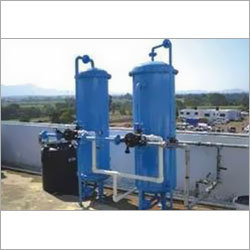
Tell us about your requirement

Price:
Quantity
Select Unit
- 50
- 100
- 200
- 250
- 500
- 1000+
Additional detail
Mobile number
Email

More Products in Water Softener Category

 Send Inquiry
Our Products


57/1/9, Site 4, Sahibabad Industrial Area, Ghaziabad - 201010, Uttar Pradesh, India

Mr. Sudheer Jaiswal
(Director)
Mobile :08045476918
 Send Inquiry
 Send SMS
Developed and Managed by Infocom Network Private Limited.


